
Essential Factors for Selecting Premium Ingredients
Selecting premium ingredients sharpens flavors and ensures balanced textures when grilling and assembling. Any small choice, from olive oil quality to herb freshness, changes the outcome.
- You choose poultry processed recently for peak freshness.
- You pick seasonal produce with vibrant color and scent.
- You prefer high-quality olive oil and acid for bright dressings.
Sourcing High-Quality Poultry Cuts
Choose cuts with firm flesh, minimal odor, and consistent color, and ask your butcher about recent processing dates so you can grill juicy, safe chicken.
Identifying Peak Seasonal Produce
Look for glossy skins, firm texture, and concentrated aroma when selecting tomatoes, peaches, or greens so your salad complements grilled chicken without sogginess.
When identifying seasonal produce, visit local markets or ask grocers about peak harvests; you should favor items that feel heavy for their size, give slightly to gentle pressure for stone fruits, and have pronounced scent. Avoid produce with soft spots or dull color. Matching a summer tomato or peach with charred chicken enhances sweetness and texture in your salad.
How-To Master the Rapid Marinade Process
Cut small slits in chicken and use a high-acid, low-salt quick marinade for 10 to 20 minutes to penetrate meat without overcooking. Use olive oil, citrus, and a pinch of salt with herbs to speed flavor absorption so grilling takes minimal time while maximizing taste.
Balancing Acids, Oils, and Aromatics
Balance acidity and oil so you don’t overcook: aim for a 2:1 oil-to-acid ratio, bright citrus or vinegar for zip, and a mild oil to carry flavors. Add garlic, shallot, and herbs sparingly to prevent bitterness during quick marinades.
Techniques for Quick Flavor Infusion
Press marinade into meat with a zip-top bag, massage for one to two minutes, or use a fork to pierce for faster uptake; warm marinade slightly to increase molecular movement and shorten marinating time to under 30 minutes.
Use vacuum-sealed or zip-top bags and press out air to force marinade into fibers; alternatively, wrap chicken in plastic and apply firm pressure. You can gently warm the marinade to about 95°F to speed infusion, but limit acidic contact to avoid texture breakdown. Pounding chicken to even thickness and scoring skin also amplifies surface area for rapid, even flavor uptake.
Professional Tips for Grilling Juicy Chicken
Practice brining or a quick salt rub to lock moisture; sear over high heat then finish over moderate heat for even doneness. Perceiving how the meat feels and using a thermometer helps you pull it at perfect juiciness.
- Keep a digital thermometer handy for precise pulls.
- Let rested meat sit five minutes before slicing to retain juices.
- Trim excess fat and pound pieces evenly for uniform cooking.
Managing Heat Zones for Even Cooking
Create two heat zones-direct for searing, indirect for finishing-so you can shift pieces as they brown; this controls flare-ups and ensures consistent doneness across breasts and thighs.
Achieving the Perfect Char Without Drying
Sear briefly over high heat to build a flavorful crust, then move pieces to indirect heat to finish cooking; you preserve interior juices while achieving a smoky char.
Monitor internal temperature (165°F for white meat, 175°F for dark) and pull chicken a few degrees early so carryover heat finishes it; you should thinly oil skins to promote even browning, avoid high-sugar rubs over direct flame, and rest the meat before slicing to lock in moisture.
How-To Construct a Multi-Textured Salad Base
You should balance textures by combining tender greens, crisp vegetables, and small cooked elements so each bite delivers contrast and interest.
Combining Leafy Greens and Crisp Vegetables
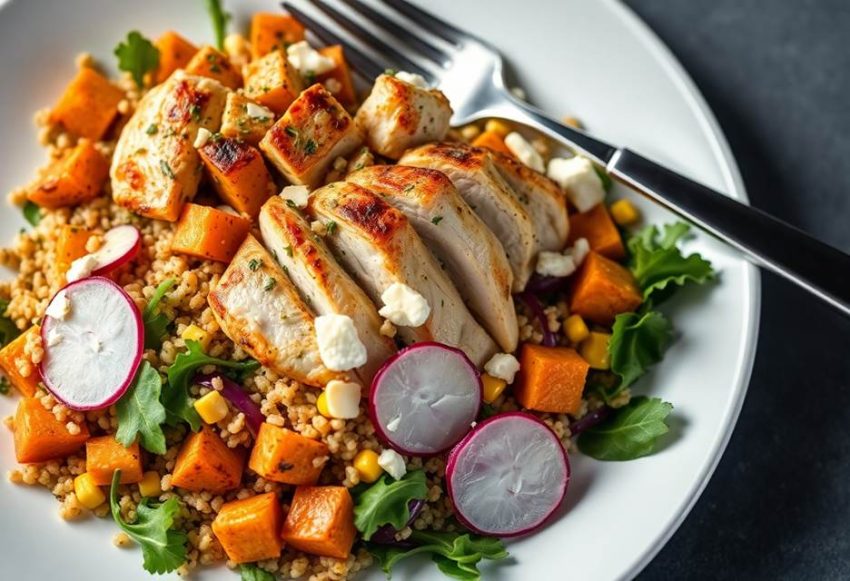
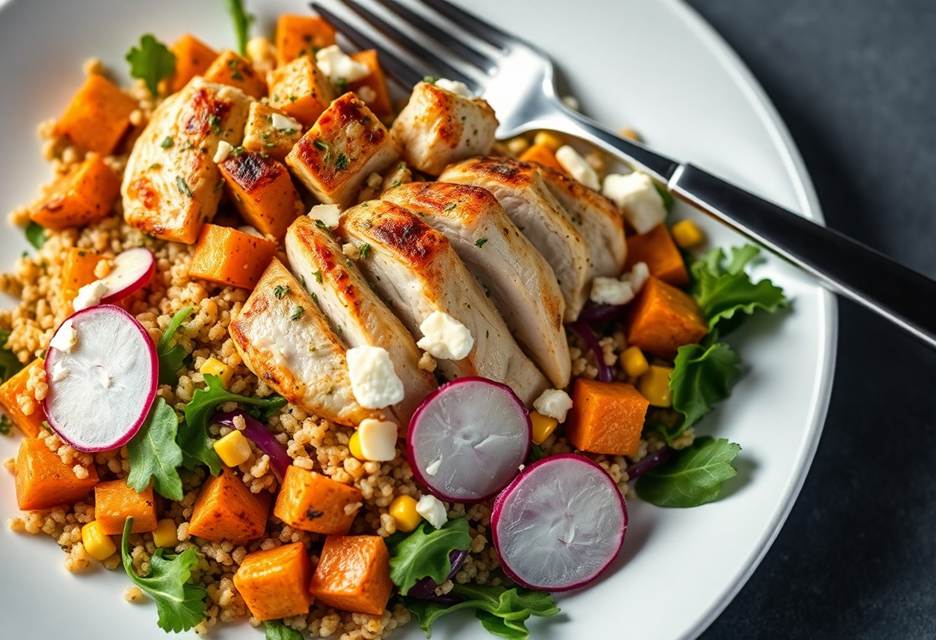
Choose a mix of peppery arugula, tender spinach, and crunchy romaine, then add cucumbers, radishes, and bell peppers for bright color and satisfying snap.
Integrating Toasted Grains and Seeds
Toast quinoa, farro, or seeds until fragrant and sprinkle them over the greens to introduce nutty crunch and chewy substance that complements the chicken.
Allow grains to cool fully before tossing with dressing, then mix in toasted pumpkin seeds, sunflower kernels, or sesame for extra texture, protein, and a toasty finish that keeps each forkful interesting.
Critical Factors for a Balanced Signature Dressing
You balance oil, acid, seasoning, and texture to craft a dressing that complements grilled chicken and fresh greens; keep proportions flexible, taste as you go, and prioritize harmony between smoke and brightness.
- Choose neutral or flavored oils to match the grill’s intensity.
- Pick acid types-lemon brightens, sherry or balsamic adds depth.
- Use an emulsifier like Dijon or yolk for stability and sheen.
- Season boldly; salt and pepper reveal smoke, herbs add freshness.
- Recognizing how small acid or oil shifts alter balance helps you adjust quickly.
Understanding Emulsification Ratios
Adjust oil-to-acid ratios around 3:1 for a classic vinaigrette, reduce oil slightly for lighter dressings, and add mustard or yolk to suspend flavors so the dressing clings to greens without separating.
Adjusting Acidity to Complement the Grill
Match acidity to the smoke level: citrus lifts charred notes, milder vinegars soothe deeper smoke, and begin with less acid, adding until brightness cuts through the richness.
Experiment by combining citrus juices with mellow vinegars-try lemon plus rice vinegar or orange with sherry-then balance with a touch of sweetness and salt; you can finish with a splash after grilling to preserve brightness while respecting the smoky profile.
Expert Tips for Streamlined Meal Prep
You shave minutes by prepping components together: batch-cook chicken, wash greens, portion grains, and craft dressings ahead. Any airtight containers and labeled portions keep freshness and speed weekly assembly.
- Batch-grill chicken for multiple meals.
- Label and date portions for quick rotation.
- Keep dressings separate until serving.
Batch Cooking for Weeknight Efficiency
Prep large batches of grilled chicken and grains, portion into meal containers, and freeze or refrigerate portions for fast assembly on busy evenings.
Proper Storage to Maintain Maximum Freshness
Store chicken and salad components separately, tuck greens between paper towels, and seal dressings in small jars to prevent sogginess.
Seal cooked chicken in shallow containers so it cools evenly, chill within two hours, and label with dates so you use older portions first; use clear, airtight containers and a separate snack-size jar for dressings to keep salads crisp through the week.
Summing up
Summing up, you can whip a bright grilled chicken salad in minutes by using quick-marinated chicken, crisp greens, fresh herbs, and a zesty dressing; balance textures and flavors, toss while warm, and serve immediately for a satisfying, healthy meal that fits busy schedules.
How-To Create A Fresh And Flavorful Grilled Chicken Salad In Minutes
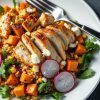
Most cooks can grill juicy chicken fast; this guide shows you simple techniques to build a crisp, flavorful salad with minimal prep, bright dressing, and balanced textures.
Essential Factors for Selecting Premium Ingredients
Selecting premium ingredients sharpens flavors and ensures balanced textures when grilling and assembling. Any small choice, from olive oil quality to herb freshness, changes the outcome.
- You choose poultry processed recently for peak freshness.
- You pick seasonal produce with vibrant color and scent.
- You prefer high-quality olive oil and acid for bright dressings.
Sourcing High-Quality Poultry Cuts
Choose cuts with firm flesh, minimal odor, and consistent color, and ask your butcher about recent processing dates so you can grill juicy, safe chicken.
Identifying Peak Seasonal Produce
Look for glossy skins, firm texture, and concentrated aroma when selecting tomatoes, peaches, or greens so your salad complements grilled chicken without sogginess.
When identifying seasonal produce, visit local markets or ask grocers about peak harvests; you should favor items that feel heavy for their size, give slightly to gentle pressure for stone fruits, and have pronounced scent. Avoid produce with soft spots or dull color. Matching a summer tomato or peach with charred chicken enhances sweetness and texture in your salad.
How-To Master the Rapid Marinade Process
Cut small slits in chicken and use a high-acid, low-salt quick marinade for 10 to 20 minutes to penetrate meat without overcooking. Use olive oil, citrus, and a pinch of salt with herbs to speed flavor absorption so grilling takes minimal time while maximizing taste.
Balancing Acids, Oils, and Aromatics
Balance acidity and oil so you don’t overcook: aim for a 2:1 oil-to-acid ratio, bright citrus or vinegar for zip, and a mild oil to carry flavors. Add garlic, shallot, and herbs sparingly to prevent bitterness during quick marinades.
Techniques for Quick Flavor Infusion
Press marinade into meat with a zip-top bag, massage for one to two minutes, or use a fork to pierce for faster uptake; warm marinade slightly to increase molecular movement and shorten marinating time to under 30 minutes.
Use vacuum-sealed or zip-top bags and press out air to force marinade into fibers; alternatively, wrap chicken in plastic and apply firm pressure. You can gently warm the marinade to about 95°F to speed infusion, but limit acidic contact to avoid texture breakdown. Pounding chicken to even thickness and scoring skin also amplifies surface area for rapid, even flavor uptake.
Professional Tips for Grilling Juicy Chicken
Practice brining or a quick salt rub to lock moisture; sear over high heat then finish over moderate heat for even doneness. Perceiving how the meat feels and using a thermometer helps you pull it at perfect juiciness.
- Keep a digital thermometer handy for precise pulls.
- Let rested meat sit five minutes before slicing to retain juices.
- Trim excess fat and pound pieces evenly for uniform cooking.
Managing Heat Zones for Even Cooking
Create two heat zones-direct for searing, indirect for finishing-so you can shift pieces as they brown; this controls flare-ups and ensures consistent doneness across breasts and thighs.
Achieving the Perfect Char Without Drying
Sear briefly over high heat to build a flavorful crust, then move pieces to indirect heat to finish cooking; you preserve interior juices while achieving a smoky char.
Monitor internal temperature (165°F for white meat, 175°F for dark) and pull chicken a few degrees early so carryover heat finishes it; you should thinly oil skins to promote even browning, avoid high-sugar rubs over direct flame, and rest the meat before slicing to lock in moisture.
How-To Construct a Multi-Textured Salad Base
You should balance textures by combining tender greens, crisp vegetables, and small cooked elements so each bite delivers contrast and interest.
Combining Leafy Greens and Crisp Vegetables
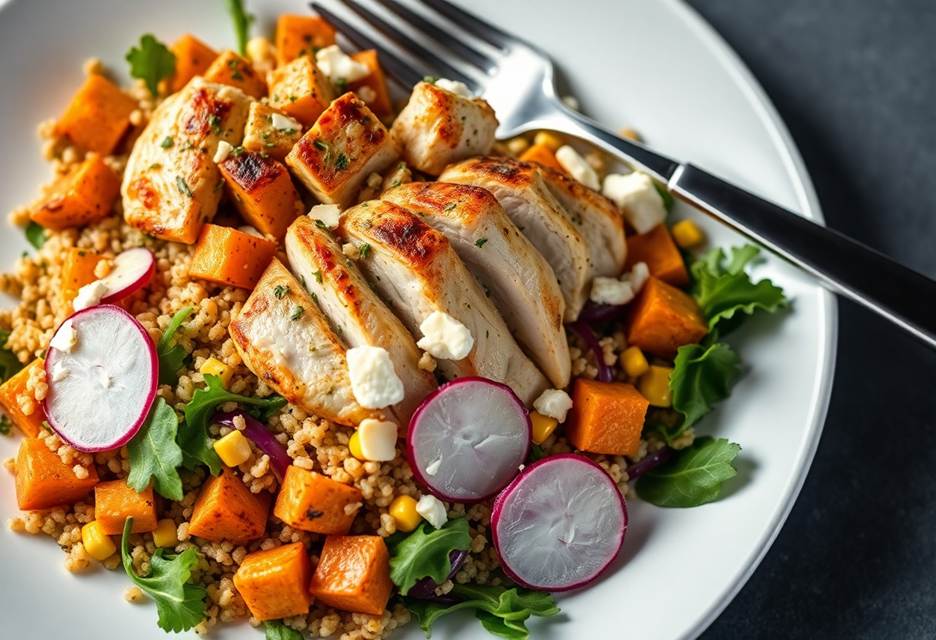
Choose a mix of peppery arugula, tender spinach, and crunchy romaine, then add cucumbers, radishes, and bell peppers for bright color and satisfying snap.
Integrating Toasted Grains and Seeds
Toast quinoa, farro, or seeds until fragrant and sprinkle them over the greens to introduce nutty crunch and chewy substance that complements the chicken.
Allow grains to cool fully before tossing with dressing, then mix in toasted pumpkin seeds, sunflower kernels, or sesame for extra texture, protein, and a toasty finish that keeps each forkful interesting.
Critical Factors for a Balanced Signature Dressing
You balance oil, acid, seasoning, and texture to craft a dressing that complements grilled chicken and fresh greens; keep proportions flexible, taste as you go, and prioritize harmony between smoke and brightness.
- Choose neutral or flavored oils to match the grill’s intensity.
- Pick acid types-lemon brightens, sherry or balsamic adds depth.
- Use an emulsifier like Dijon or yolk for stability and sheen.
- Season boldly; salt and pepper reveal smoke, herbs add freshness.
- Recognizing how small acid or oil shifts alter balance helps you adjust quickly.
Understanding Emulsification Ratios
Adjust oil-to-acid ratios around 3:1 for a classic vinaigrette, reduce oil slightly for lighter dressings, and add mustard or yolk to suspend flavors so the dressing clings to greens without separating.
Adjusting Acidity to Complement the Grill
Match acidity to the smoke level: citrus lifts charred notes, milder vinegars soothe deeper smoke, and begin with less acid, adding until brightness cuts through the richness.
Experiment by combining citrus juices with mellow vinegars-try lemon plus rice vinegar or orange with sherry-then balance with a touch of sweetness and salt; you can finish with a splash after grilling to preserve brightness while respecting the smoky profile.
Expert Tips for Streamlined Meal Prep
You shave minutes by prepping components together: batch-cook chicken, wash greens, portion grains, and craft dressings ahead. Any airtight containers and labeled portions keep freshness and speed weekly assembly.
- Batch-grill chicken for multiple meals.
- Label and date portions for quick rotation.
- Keep dressings separate until serving.
Batch Cooking for Weeknight Efficiency
Prep large batches of grilled chicken and grains, portion into meal containers, and freeze or refrigerate portions for fast assembly on busy evenings.
Proper Storage to Maintain Maximum Freshness
Store chicken and salad components separately, tuck greens between paper towels, and seal dressings in small jars to prevent sogginess.
Seal cooked chicken in shallow containers so it cools evenly, chill within two hours, and label with dates so you use older portions first; use clear, airtight containers and a separate snack-size jar for dressings to keep salads crisp through the week.
Summing up
Summing up, you can whip a bright grilled chicken salad in minutes by using quick-marinated chicken, crisp greens, fresh herbs, and a zesty dressing; balance textures and flavors, toss while warm, and serve immediately for a satisfying, healthy meal that fits busy schedules.









1 thought on “How-To Create A Fresh And Flavorful Grilled Chicken Salad In Minutes”