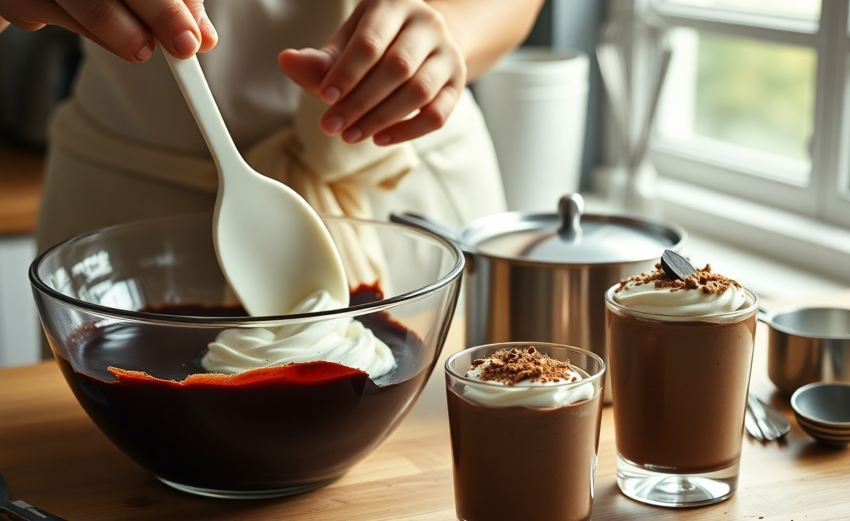
There’s a straightforward method you can follow to make a rich, silky chocolate mousse at home using high-quality dark chocolate, properly whipped egg whites or cream, gentle folding, and chilling for a glossy, airy texture.
Critical Factors for a Rich Flavor Profile
Balance intensity, sweetness, and bitterness by adjusting chocolate percentage, sugar, and a pinch of salt so flavors sing together without overpowering texture. Tweak sugar to suit your palate and keep temperatures controlled. Knowing which element to emphasize helps you craft a consistently deep, silky mousse.
• Chocolate percentage and quality
• Cream and butter fat content
• Sugar and salt balance
• Temperature and technique
Selecting Premium Cocoa Percentages
Choose cocoa percentage to match your sweetness tolerance: 50-60% for smooth, 70% for pronounced chocolate, and 85%+ for intense bitters that you temper with cream; taste along the way to find your preferred depth.
The Role of Fat Content in Cream and Butter
Consider using heavy cream (36%+) and high-quality butter to give mousse a velvety mouthfeel and to carry flavor; lower-fat options thin the texture and mute cocoa’s complexity, so match fat level to your desired richness.
Explore how fat interacts with cocoa to shape mouthfeel: higher-fat cream traps air when whipped, producing stable, glossy peaks, while butter folded into warm ganache adds silkiness and shine. You should cool components to control aeration, fold gently to preserve bubbles, and avoid overwhipping which can break the emulsion. If you want lighter results, blend lower-fat dairy with a spoonful of mascarpone or crème fraîche for body without heaviness.
How-To Prepare the Chocolate Foundation
Layer finely chopped dark chocolate with a splash of warm cream in a heatproof bowl, and you create a glossy base that supports an airy mousse.
Melting Chocolate Using the Bain-Marie Method
Place a heatproof bowl over simmering water and stir chocolate until smooth so you control temperature and prevent scorching for a silky finish.
Emulsifying Liquids for a Glossy Finish
Whisk warm cream into melted chocolate gradually so you form a stable emulsion that yields a shiny, homogenous foundation for mousse.
Use warm liquids near the chocolate’s temperature and add them slowly while whisking so you prevent breakup; a teaspoon of neutral oil or a beaten yolk can increase gloss and stability.
How-To Master the Aeration Process
You control mousse texture by careful aeration: whisk egg whites to soft peaks, whip cream until light and billowy, keep temperatures right, and avoid overbeating. Use steady speed increases and add sugar in stages so bubbles form steadily and remain stable for a silky, airy finished mousse.
Whipping Techniques for Meringue and Cream
Whip egg whites in a metal bowl until soft peaks form, then add sugar gradually; for cream, chill bowl and beaters, then whip to medium peaks so it holds shape without becoming grainy. You should stop just before stiffness to preserve silkiness when folded into chocolate.
Folding Methods to Preserve Air Bubbles
Fold gently in large, sweeping figure-eight motions, cutting through the center and lifting the mixture to turn the bowl. You should stop when streaks are almost gone so bubbles stay intact and mousse keeps its airy, silky texture.
Add a third of the whipped cream or meringue into your chocolate to loosen it, then gently fold in the remainder with broad strokes. You should flip the bowl and scrape the sides, always pausing when mixture looks uniform but still airy, then chill immediately to set without collapsing.
Essential Factors for Achieving Silkiness
Texture depends on particle size, emulsification, and air incorporation to make your mousse velvety. Any imbalance in temperature or mixing will cause you to end up with grainy or weeping mousse.
• You favor finely grated chocolate for quicker melting.
• You whip cream to soft peaks to keep silkiness.
• You fold gently to preserve airy texture.
Managing Ingredient Temperatures
Chocolate and eggs should be brought close to each other’s temperature so you can emulsify smoothly and keep your mousse silkier.
Temperature Guide
Ingredient Target / Tip
Chocolate Melt to 40-45°C
Eggs Bring to room temperature
Cream Keep chilled for firm whipping
Sifting and Straining for Uniformity
Sifting cocoa and straining custard removes lumps and aerates dry ingredients so you get a mousse that feels silkier on the palate.
Fine-mesh sieves trap stubborn particles, so you should press custard through a tamis and force dry cocoa through to ensure a glossy, lump-free base before folding in whipped cream.
Expert Tips for Perfect Setting and Texture
You should whip cream to soft peaks, temper chocolate until smooth, and fold gently to preserve air. Recognizing the right sheen on tempered chocolate and slight billows in whipped cream tells you when to stop folding for a silkier set.
• Whip cream to soft peaks, not stiff.
• Temper chocolate to a glossy finish at the right temperature.
• Fold with a spatula using wide, gentle motions.
Optimal Chilling Durations
Allow your mousse to chill two to four hours in the refrigerator; shorter chilling yields a softer set, while three to four hours gives a firm yet silky texture without over-drying the surface.
Troubleshooting Grainy or Runny Mousse
If your mousse turns grainy, check that the chocolate wasn’t overheated and that you folded cream gently; if it’s runny, confirm the cream reached soft peaks and the chocolate-to-cream ratio is balanced.
Adjust by gently warming a grainy mixture and whisking in a tablespoon of hot cream to re-emulsify; if your mousse is runny, whip extra chilled cream to soft peaks and fold in gradually, then chill briefly to set.
Creative Tips for Presentation and Garnish
Presentation dictates how guests perceive your mousse; pick contrasting glassware, textures, and colors to make it pop. Assume that you garnish sparingly with micro herbs, cocoa dust, a chocolate shard, or delicate fruit to keep the texture silky.
• Use clear glasses for layers
• Keep garnishes minimal
• Vary textures for contrast
Infusing Flavors with Zest or Liqueurs
You can brighten mousse by folding in orange or coffee liqueur; add zest sparingly to avoid bitterness and keep mousse airy.
Professional Plating and Topping Ideas
Consider plating with smear sauces, crisp tuile, and a quenelle of ice cream to let you add height and contrast to the mousse.
Use texture contrast: scatter toasted nuts, freeze-dried fruit powder, or a sprinkle of Maldon to provide crunch; place garnishes off-center for asymmetry and pace spoonfuls so you control flavor with each bite.
Summing up
Considering all points, you can make rich, silky chocolate mousse at home by using high-quality chocolate, whipping cream to soft peaks, gently folding mixtures to retain air, chilling long enough to set, and serving chilled for optimal texture and flavor.