
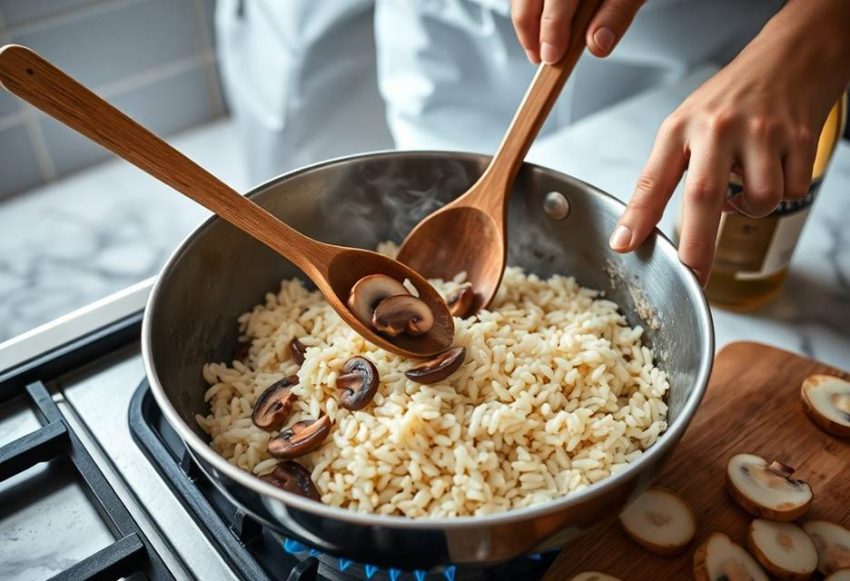
Cooking risotto like a pro requires patient stirring, quality arborio rice, flavorful stock, and sautéed mushrooms; you’ll learn precise timing and techniques to achieve silky, creamy results every time.
Critical Factors for Ingredient Selection
You should prioritize rice quality, fresh and dried mushrooms, rich homemade stock, and finishing butter and Parmigiano for that silky texture and layered flavor.
- Rice: Arborio vs Carnaroli
- Mushrooms: fresh and dried mix
- Stock: homemade, hot
- Finish: butter and Parmigiano
Choosing Between Arborio and Carnaroli Rice
Prefer Carnaroli when you want a firmer grain and a longer cooking window; choose Arborio if you need faster absorption and a slightly creamier release.
Selecting the Best Fresh and Dried Mushroom Varieties
Select a mix of cremini or chestnut for fresh earthiness and add dried porcini or shiitake to boost umami; rehydrate them in warm stock so you retain concentrated flavor.
Consider texture differences: fresh mushrooms lend moisture and bite while dried mushrooms add depth without watering down the risotto; you can balance both by sautéing fresh briefly and folding rehydrated pieces near the end. After soaking dried mushrooms, reserve and strain the soaking liquid into your stock for a potent flavor boost.
How-To Prepare the Flavor Foundation
Build a deep flavor base by gently sweating mushrooms, shallots, and garlic in butter until lightly golden; deglaze with dry white wine and let it reduce so you create an intense foundation before the rice joins the pan.
Simmering and Seasoning a Robust Stock
Keep the stock barely simmering and taste often, adjusting salt and pepper; you should skim foam, add mushroom trimmings and a bay leaf, and maintain gentle heat so ladles warm without cooling the rice.
Sautéing Aromatics for Maximum Depth
Sauté shallots and garlic slowly in butter until translucent, then stir in mushrooms to brown; you’ll coax sweet, caramelized notes that enrich every spoonful.
You should sweat shallots and garlic over medium-low heat until they sweeten without browning, then raise heat to brown mushrooms in batches for proper color; finish by deglazing with white wine and adding a knob of butter to bind flavors, tasting as you go to balance salt and acidity.
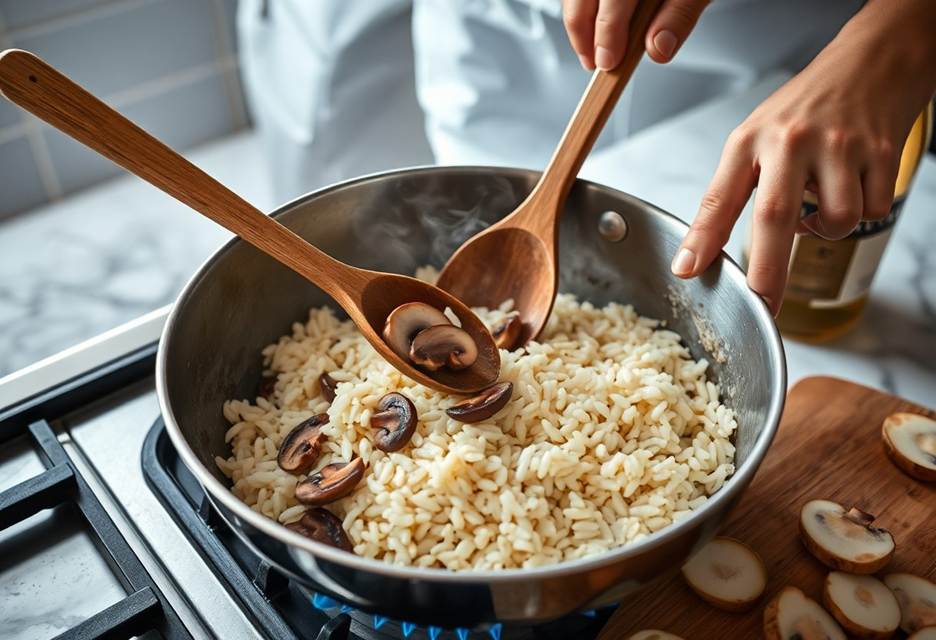
Mastering the Rice Toasting and Deglazing Phase
Tostatura sets the texture: toast each grain in hot butter or oil until edges become translucent and a nutty aroma rises, stirring constantly so you avoid scorching; this seals the starch interior while keeping the kernel intact for a creamy finish.
Achieving the Perfect Tostatura for Grain Integrity
You aim for translucent rims and a faint toasty scent; too long dries the center, too short leaves chalky grains. Stir gently, maintain even heat, and test a kernel for a firm yet slightly yielding core.
Deglazing the Pan with Dry White Wine
Wine lifts the toasted fond and adds bright acidity; pour a splash so it sizzles, reduce until the alcohol evaporates and the pan is nearly dry, then you add stock to capture concentrated flavor.
When choosing wine, pick a dry, unoaked white with lively acidity; use just enough to coat the pan, keep the heat medium-high, and scrape the browned bits with a wooden spoon as it reduces. You should smell bright fruit and see the liquid nearly vanish before you add hot stock to preserve that concentrated flavor.
The Technique of Gradual Liquid Incorporation
Pouring stock ladle by ladle lets you judge absorption and coax out starch; you add liquid only when the rice surface is nearly dry, keeping texture silky while preventing gumminess.
Maintaining the Correct Stirring Rhythm
Stirring with a gentle, regular motion keeps grains suspended without breaking them; you should match tempo to the simmer so sauce forms glossy, even coating.
Managing Heat Levels to Control Starch Release
Control heat so the stock barely simmers; you will preserve starch release and avoid a gluey finish by preventing vigorous boiling or a cold stalled pot.
Adjusting heat by watchful observation keeps consistency: on gas or induction you should drop flame quickly at the first brisk edge-of-pot bubble, and raise slightly if bubbling dies; if risotto thickens too fast, lower heat and add cooler stock, while a stalled simmer needs a brief increase so starches release steadily.
Expert Tips for the Final Mantecatura
Focus on timing and heat control during mantecatura so you finish the rice creamy without overcooking; you stop when grains hold shape. The quick whisk with cold butter and Parmigiano-Reggiano emulsifies the surface, giving silk and shine.
- Keep heat low and off the flame when whisking
- Add butter cold in small cubes
- Use freshly grated Parmigiano-Reggiano and serve immediately
Emulsifying with Cold Butter and Parmigiano-Reggiano
Whisk cold butter and finely grated Parmigiano-Reggiano vigorously off heat, adding a tablespoon of hot stock at a time so you coax a creamy emulsion that coats each grain without breaking the sauce.
Reaching the Signature All’onda Consistency
Aim for a loose, undulating texture that ripples when you spoon the risotto; you want rice to flow slowly yet cling to each grain for that classic all’onda effect.
Practice ending the cook slightly al dente, stirring steadily and testing by tilt: you should see a glossy, mobile swell that spreads and recoils. Keep a ladle of hot stock close, pull the pot off heat before mantecatura, then whisk in butter and cheese until the sauce unites and the rice glistens.
Troubleshooting Common Risotto Mistakes
Mistakes happen; you can fix a gluey risotto by stopping stirring, adding a splash of hot stock, and letting it rest off the heat so grains stay al dente and creamy.
Correcting Texture and Liquid Ratios
Texture imbalance often means too much liquid or overcooking; adjust by adding hot stock in measured ladles, lower the heat, and taste frequently so you stop when grains remain tender yet distinct.
Balancing Salt and Acid Profiles
Salt levels and acidity shape final flavor; you should correct oversalting with a squeeze of lemon or a knob of unsalted butter, and brighten dull risotto with a few drops of vinegar or lemon juice.
Balance acid slowly: add a few drops of lemon or vinegar, taste between additions, and counter excessive acidity with a knob of unsalted butter or grated Parmigiano-Reggiano; you can always add more acid, so proceed cautiously.
To wrap up Considering all points, you can master creamy mushroom risotto by using arborio rice, toasting grains, adding warm stock gradually, stirring for release of starch, finishing with butter and Parmesan, and tasting for seasoning; practice and attention to texture will make your results authentically Italian.